Define the metalworking window
Material, thickness, edge quality, weld finish and shift target are documented before equipment is compared.
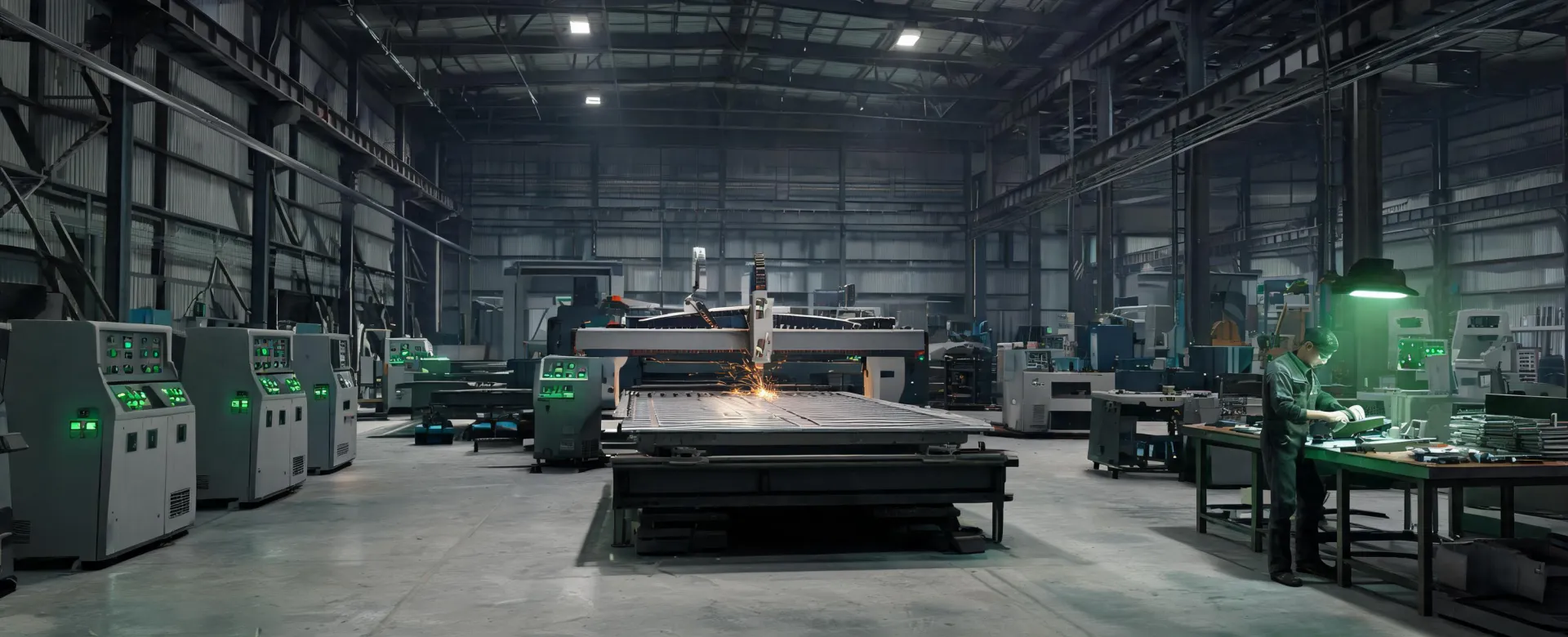
The company story presented here is about disciplined problem solving: material behavior, torch physics, operator workflow and service readiness are treated as one system. For buyers, that means a conversation can move beyond a model number and toward the evidence needed to keep production stable.
Hypertherm planning starts with the assumption that a plasma cutter or welding machine must be judged in context. A system that looks efficient on a datasheet can underperform if the torch is mismatched, the material mix shifts, the air supply is unstable or operators inherit unclear setup rules.
The roadmap therefore links product selection, application review, service access and training language. It gives engineers, purchasing managers and production supervisors a shared frame for deciding what should be standardized and what should remain flexible by application.
Part of being honest about fit is naming the boundaries. A plasma platform is not the answer for every job: very thin precision work, non-conductive material, mirror-finish edges or plate beyond a machine's rated severance limit may point toward laser, waterjet or oxyfuel instead. Hypertherm planning is meant to confirm where the process genuinely fits before equipment is shortlisted.
Material, thickness, edge quality, weld finish and shift target are documented before equipment is compared.
Machine output, torch configuration and consumable strategy are matched to the work rather than treated as separate purchases.
Maintenance routes, distributor support and operator feedback help the equipment remain useful after commissioning.
Cut samples, weld trials and production constraints are gathered before a specification becomes final.
MIG, TIG, plasma and multi-process platforms are compared by actual workload instead of broad category labels.
CNC torch control, height response and nesting workflow are reviewed as part of the buying conversation.
Consumable life, inspection rhythm and part access are included in the long-term value model.
The ecosystem behind an industrial cutting platform includes distributors, integrators, training teams and plant maintenance groups. Each participant needs clear technical language so decisions do not fragment after installation.
Local product access, consumable availability and practical field knowledge.
CNC, robot, table and fixture planning for repeatable production cells.
Operator confidence for safe setup, cut inspection and weld procedure discipline.
Inspection routines and repair routes that protect uptime across shifts.
Share the process mix, material range and service expectations so the next equipment discussion can include evidence, not only catalog names.