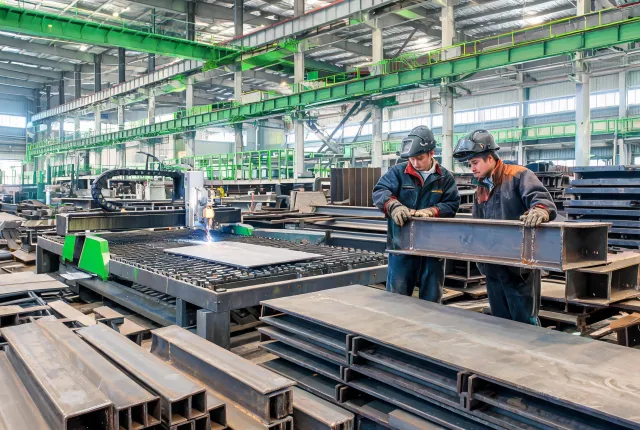
Fabrication
Job shops need fast process changeover, clear cut edge expectations and welding machines that can support mixed assemblies without confusing operators.
Industrial users do not evaluate cutting and welding equipment in abstract categories. They judge it against part size, inspection requirements, operator skill, material movement, repair windows and the cost of missed production time.
The same plasma cutter or welding machine family can serve very different environments when torch access, procedure control and service support are tuned to the industry.
Job shops need fast process changeover, clear cut edge expectations and welding machines that can support mixed assemblies without confusing operators.
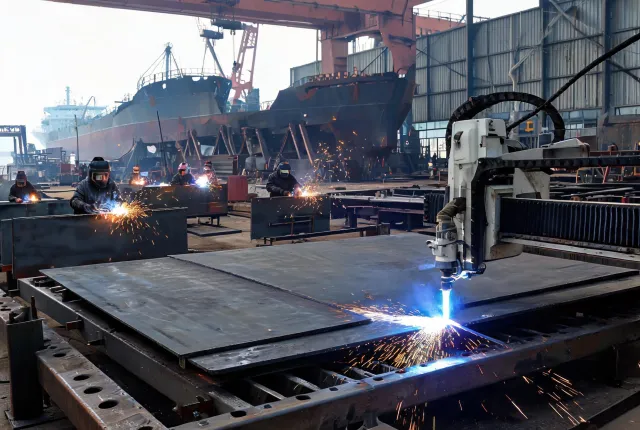
Plate thickness, long duty cycles and repair access require equipment planning that treats the ship panel as a production system.
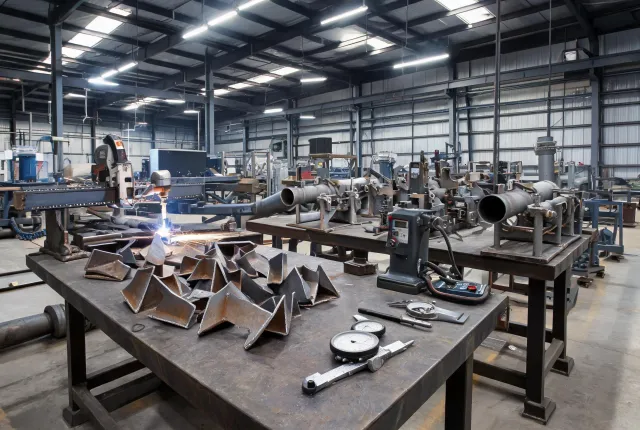
Field and shop teams focus on joint preparation, bevel consistency, torch reach and serviceable equipment for critical assemblies.
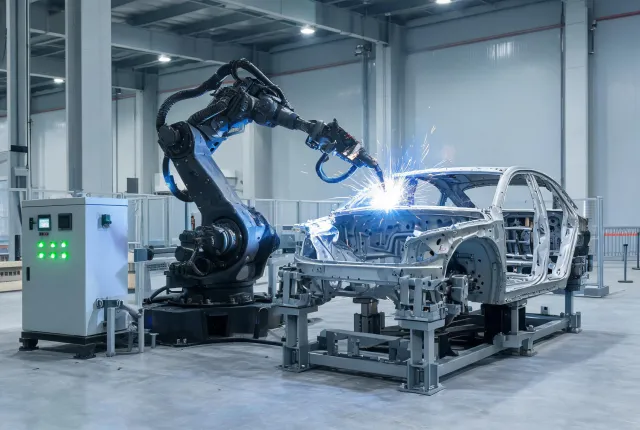
Repeat parts need stable control logic, predictable consumable intervals and data that helps maintenance teams prevent hidden drift.
Industry projects usually begin with a specific friction point: secondary grinding after plasma cutting, inconsistent manual setup, uncontrolled consumable usage or automation alarms that slow an entire cell. The equipment answer is strongest when it addresses that bottleneck directly.
A fabrication team can use process review to align amperage, torch height and consumable choices with its most common plate range.
Better cut consistency helps welders spend less time correcting gaps and more time holding procedure targets.
Inspection routines and consumable records help supervisors plan outages before production discovers a failure.
Hypertherm is a plasma-focused brand, but an honest application review names the points where plasma is the strongest fit and the points where another method may serve a sector better. The comparison below is about matching the cut to the job, not declaring a single winner.
| Decision factor | When plasma is the practical choice | When to weigh an alternative |
|---|---|---|
| Material and thickness | Conductive metals such as mild steel, stainless and aluminium across a wide gauge-to-plate range, where fast pierce and travel speed matter for fabrication throughput. | Very thin precision sheet, non-conductive material, or thick heavy plate beyond the machine's rated severance limit, where laser, waterjet or oxyfuel may be better suited. |
| Edge quality and tolerance | Production cuts where a small, predictable bevel and minimal dross are acceptable into downstream welding or grinding. | Mirror-finish or tight-tolerance edges that must skip secondary work, where the cut taper inherent to plasma becomes a constraint. |
| Heat input and distortion | Parts that tolerate a narrow heat-affected zone and can be fixtured to manage movement on a cutting table. | Thin or distortion-sensitive assemblies where any thermal input is a risk and a cold cutting process is preferred. |
| Site and operating cost | Shops needing clean compressed air, predictable consumable replacement and a lower capital entry than laser or waterjet. | Environments without stable, dry air supply, or volume work where a higher-capital method lowers per-part cost over time. |
An application review uses these factors to confirm whether plasma matches the sector's part family, inspection target and production rhythm before equipment is shortlisted.
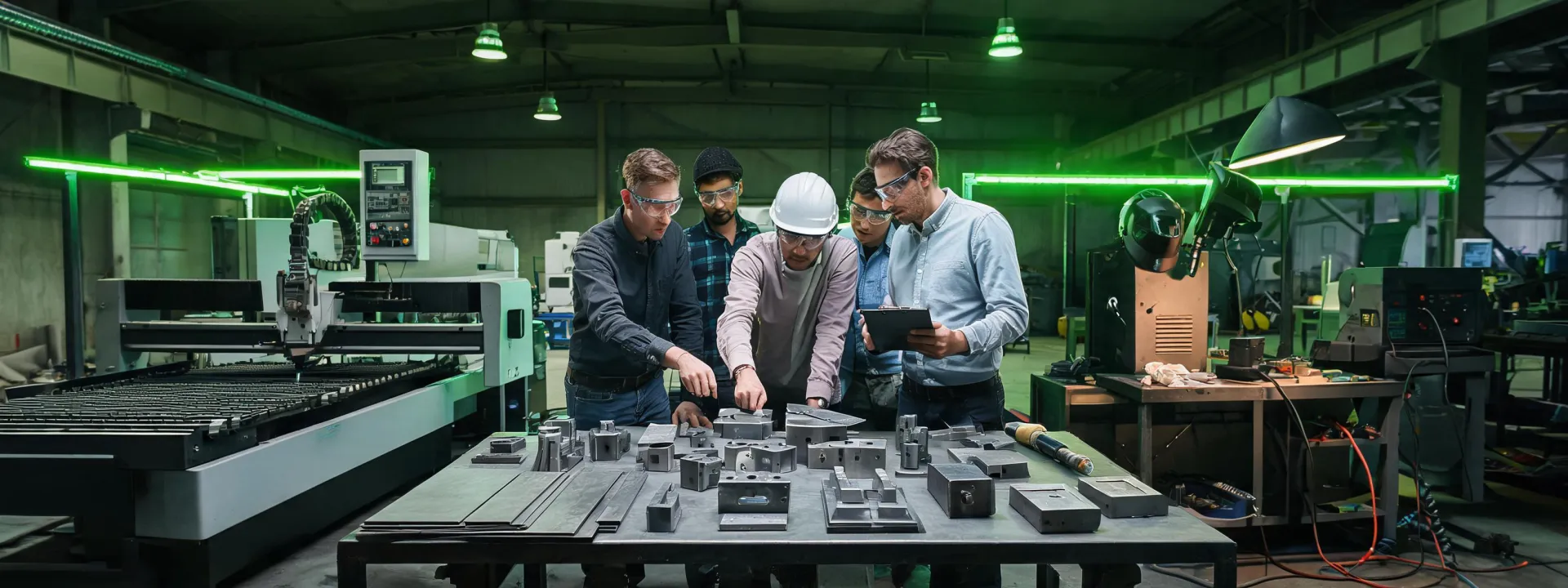
A focused application review can identify whether the priority is arc control, cutting speed, torch access, automation communication or maintenance planning.