There is no single right setup
I am an office administrator for a 70-person metal fabrication company. I manage MRO and capital equipment ordering, roughly $180k annually across 8 vendors. I report to both operations and finance. Translation: I do not get to buy the shiny thing. I have to buy the thing that keeps the shop running and survives an invoice audit.
When people ask me about hypertherm plasma cutters near me, hypertherm plasma cutter for cnc, agw welding machine, welding machine news, or a cantilever type h-beam welding machine, I cannot give one answer. The right choice depends on your cutting volume, your CNC table, your steel, and who can service you on a Friday afternoon. Here are the three scenarios I see most. Find yours.
Scenario A: You cut manually, repair, and fabricate, but you do not run a CNC table
You need a hypertherm plasma cutter that starts reliably, handles 1/4 inch to 1 inch material depending on model, and has consumables available locally. If you search for hypertherm plasma cutters near me, you are really asking: who stocks tips, electrodes, shields, and can demo the machine with my steel?
My advice: prioritize local support and consumable supply over the lowest online quote. I made the classic rookie mistake in my first year. I assumed near me meant any distributor within 100 miles. The cheap one had no consumables in stock. A $180 order turned into a four-day production delay. Four days.
What to verify:
- Cut chart for your actual thickness and material.
- Input power and plug type. Single-phase versus three-phase matters.
- Air requirements. Clean, dry air is not optional.
- Consumable kit included? Training?
- Service radius and response time in writing.
For this scenario, a Hypertherm Powermax-class machine is often the ballpark. But do not buy based on amps alone. Buy based on the cut chart and support.
Scenario B: You have a CNC table, or you are about to buy one
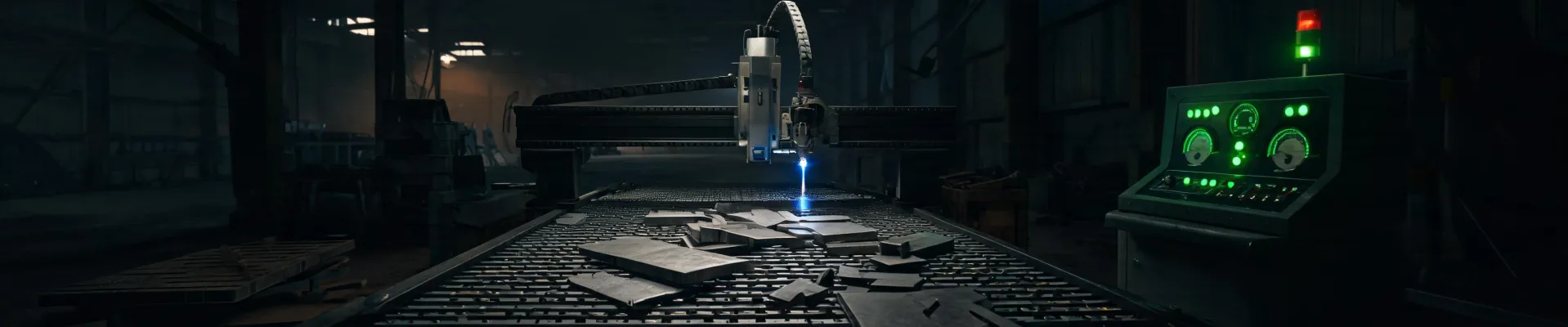
This is where the phrase hypertherm plasma cutter for cnc gets expensive if you treat it like a generic plasma cutter. A CNC-ready Hypertherm plasma cutter needs the right machine torch, interface, voltage divider, and cut charts that talk to your controller. I have seen a purchase order say hypertherm plasma cutter for cnc and the quote come back with a hand torch unit. We discovered it when the electrician arrived. Result: one week of downtime and a very unhappy production manager.
What to check:
- Machine torch versus hand torch. Not interchangeable for most table setups.
- CNC interface and plasma start/stop signals.
- Cut charts for your table software and THC.
- Duty cycle at your amp level and thickness.
- Fume control and air filtration. Your operator and your insurer care.
Here is the value-over-price part. The lower-cost plasma source can look fine on a quote. Then you add a machine torch, interface, installation, and the labor to troubleshoot cut quality. That is not a saving. That is a delayed invoice.
According to Hypertherm published cut charts and operator manuals at hypertherm.com, the specs that matter are material type, thickness, amperage, gas, and speed. Start there. Not with the sticker price.
Scenario C: You are in structural steel, H-beams, columns, and fabrication
Now the decision is bigger than one machine. You may be looking at a cantilever type h-beam welding machine, an agw welding machine, and a Hypertherm plasma cutter for your CNC table. These are not independent purchases. They are a production line.
A cantilever type h-beam welding machine can be a game-changer for repeat structural work. But it can also become a bottleneck if the machine size, travel, and welding process do not match your beam sizes. The same goes for an agw welding machine. If you are reading welding machine news and seeing shiny new options, slow down. Ask what process it runs, what duty cycle it holds, and who repairs it when the wire feeder acts up.
I still kick myself for not documenting a vendor verbal promise on service response time. If I had gotten it in writing, we would have had grounds to dispute a late fee when a welding machine went down. Now I put response time, parts availability, and training hours in the contract.
For structural work, the hidden costs are rework, weld rejection, and schedule slip. One bad weld on an H-beam can cost more than the difference between a good machine and a cheap one. That is the bottom line. Check AWS D1.1/D1.1M requirements for structural steel welding, and use ISO 9013 for thermal cut quality tolerances if you are cutting plate for those assemblies.
Also factor safety. OSHA 29 CFR 1910.252 covers welding, cutting, and brazing safety, including ventilation, fire prevention, and PPE. A machine that helps you meet those requirements is worth more than one that just has a lower price.
How to tell which scenario you are in
Answer these before you request quotes:
- How many hours per week do you actually cut? Under 10? Scenario A. Over 20 with a table? Scenario B.
- Do you have a CNC table already, or is it coming? If yes, you are in B, even if you currently cut by hand.
- What is your thickest regular material? If it is 1 inch plus and structural, read Scenario C first.
- Who is within 2 hours of your shop? If no one stocks consumables or services Hypertherm equipment, your near me search just found a red flag.
- What happens if the machine goes down for a week? If the answer is that you miss a contract, price is not your main metric.
So glad I double-checked our air compressor and dryer before we signed for a plasma table. We were one click away from a moisture problem that would have ruined consumables and cut quality. It was not the machine. It was everything around it.
If you have ever managed a capital purchase for a shop, you know the lowest quote rarely stays low. Get the cut charts, get the service terms in writing, and match the machine to your scenario. Then negotiate.

Elise Marceau
Elise Marceau is an LED display and digital-signage systems analyst covering LED video walls, modular screens, transparent LED, control processors, and indoor or outdoor signage. She applies IEC 62368-1 safety principles while comparing pixel pitch, luminance, contrast, refresh rate, colour uniformity, viewing angle, ingress protection, power density, module serviceability, and signal redundancy. Her specification guides help integrators, venue operators, retailers, and procurement teams align viewing distance, ambient light, content format, installation access, electrical load, and lifecycle support.