I'm the office administrator for a 35-person metal fabrication company. I manage all equipment and supply ordering—roughly $180,000 annually across 12 vendors. I report to both operations and finance, which means every purchase I make gets scrutinized from two angles: does it work, and does it cost what we said it would.
In November 2023, that dual reporting structure nearly cost us our biggest client.
The Dead Plasma Cutter and a $2,600 Decision
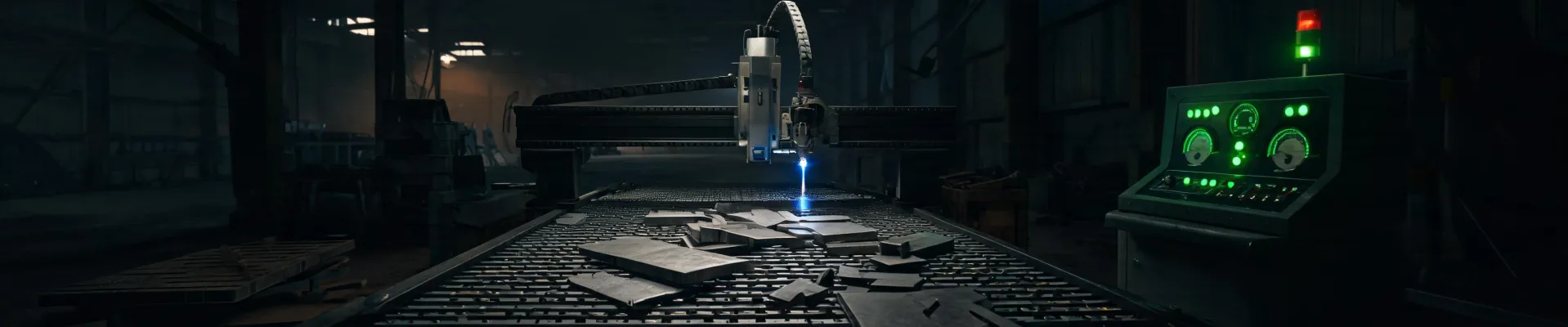
Our old plasma cutting machine finally quit. The shop foreman needed a replacement, fast. I pulled three quotes and laid them side by side on my desk.
- A refurbished Hypertherm Powermax 30 Air plasma cutter — $4,800
- A no-name import plasma cutter — $2,200
Both cut steel. Both had similar amperage ratings. The shop foreman said either would work. My instinct said go cheap—$2,600 is real money when you're approving department budgets.
I ordered the $2,200 machine. The foreman didn't argue. He just gave me a look I should have paid more attention to.
What Went Wrong (Everything)
For the first three weeks, the cheap cutter was fine. Cut speed was slightly slower, but nobody complained. Then we landed a 40,000-dollar stainless steel project—0.5-inch plate, dozens of precision parts.
The cutter couldn't handle it.
Dross on every edge. Bevel angles that didn't match the specs. Consumables burning out every 48 hours. Our welders spent more time grinding than welding. And then the X-ray welding machine found porosity in the weld joints—defects that traced directly back to the rough cuts.
The client rejected the batch. We reworked it. Missed a second deadline. Our foreman started calling the import unit "the boat anchor."
Total cost of the cheap machine: roughly $15,400 in rework labor, expedited material, and one very uncomfortable phone call with our biggest client's quality manager.
The $2,600 I thought I saved? I'd have paid double to undo that decision.
The Reset
I sold the import cutter for $600 (it went to a hobbyist on Craigslist, not a production shop—I couldn't morally sell it to another fabricator). Then I called Hypertherm support directly.
Four minutes on hold. A real person picked up. I explained our application—0.5-inch stainless, mixed mild steel work, no external compressed air in that part of the shop. The support rep recommended the Hypertherm Powermax 30 Air, which has an built-in compressor. He also pulled up consumable life data for our specific material thickness and walked me through an ROI comparison.
I'm not a welding engineer, so I can't speak to the metallurgical specifics of why the cut quality was better. What I can tell you from a procurement perspective is this: the consumables lasted three times longer, the cuts needed almost zero cleanup, and our weld rejection rate dropped to near zero.
We paid $6,200 for the Powermax 30 Air. More than double the cheap unit. Worth every dollar.
The PPE Wake-Up Call
That experience made me reconsider something I'd been treating as a commodity: welding equipment PPE.
We'd been buying budget auto-darkening helmets and FR sleeves. Cheapest options from our industrial supplier. The helmets failed regularly—lenses clouded, sensor response lagged. Our welders complained constantly. Then one of our operators took a spark to the jaw when his helmet failed to darken fast enough.
Not a serious burn, thankfully. But the message was clear: I was saving $40 per helmet and risking a $40,000 OSHA fine. Or worse.
We switched to mid-tier helmets and better FR gear. The cost roughly doubled. The complaints stopped entirely. Our weld quality stayed consistent across shifts because the operators weren't fighting their gear.
Here's what I learned: the stuff your team produces—the cuts, the welds, the finished parts—that's what the client judges you on. They never see your plasma cutter or your helmets. But they absolutely see the porosity, the rough edges, the inconsistent weld beads. Quality perception starts on your shop floor, whether you acknowledge it or not.
What I Do Differently Now
When I evaluate a new equipment purchase, I run it through three filters:
- Total cost of ownership, not sticker price. The Powermax 30 Air cost more upfront but eliminated consumable waste and rework. Finite math.
- Support infrastructure. Before buying, I call the support line anonymously. If I can't reach a human in 10 minutes, that brand is off my list. Hypertherm passed that test. The import brand didn't even have a U.S. support number.
- Does this affect what the customer receives? If a purchase touches the output—cut quality, weld appearance, delivery time—I lean toward the better option, even if it costs more.
A laser tube welding machine is next on our capital plan. I'm already applying these filters. The cheap option is tempting. I keep the rejected batch invoice pinned to my bulletin board as a reminder.
The Part I'm Not Qualified to Judge
I want to be clear about my limits here. My experience is based on roughly 200 equipment purchases over five years in mid-range metal fabrication. I can't speak to how these principles apply to heavy industrial, aerospace, or high-precision medical manufacturing. Those shops have different tolerances, different certification requirements, and different price points. If you're in one of those categories, your experience will differ.
What I can tell you is this: in our shop, buying the better plasma cutter saved a client relationship, eliminated overtime rework, and cut our consumable spend by 60 percent. The $4,000 difference disappeared in six months.
The cheap machine's invoice is still pinned to my wall. Not because I'm sentimental. Because I need to remember what "saving money" can actually cost.

Henrik Solberg
Henrik Solberg is a commercial machinery safety, reliability, and procurement analyst covering display, audio, printing, sewing, cleaning, laser, welding, and supporting automation systems. He applies ISO 12100 risk-assessment principles and IEC 60300-3-3 lifecycle-costing guidance while comparing uptime, MTBF, MTTR, energy use, consumable demand, preventive-maintenance intervals, spare-parts lead time, training burden, installation constraints, and residual risk. His decision frameworks help plant managers, integrators, and procurement teams compare quotations, validate operating assumptions, plan acceptance tests, and select equipment on total delivered value.