The Comparison That Comes Up in Every Shop Audit
I'm the quality/compliance manager at a metal fabrication company. I review every machine spec before it reaches the floor—roughly 200 purchase orders a year. I've rejected 12% of first deliveries in 2025 for wrong torch leads, missing manuals, or mismatched shipping codes.
The question I get more than any other from shop owners: If you could buy one machine first, would it be a mechanized plasma system or a MIG welder? These aren't direct competitors, but the choice is real when budgets are tight. A mechanized plasma system cuts. A MIG welder joins. Both belong in a metal shop, but the first purchase should be the one that removes the biggest bottleneck.
Here's how I compare them: cutting capability, stainless steel work, ventilation requirements, and the shipping and ordering details that nobody talks about.
Dimension 1: What Each Machine Actually Does for You
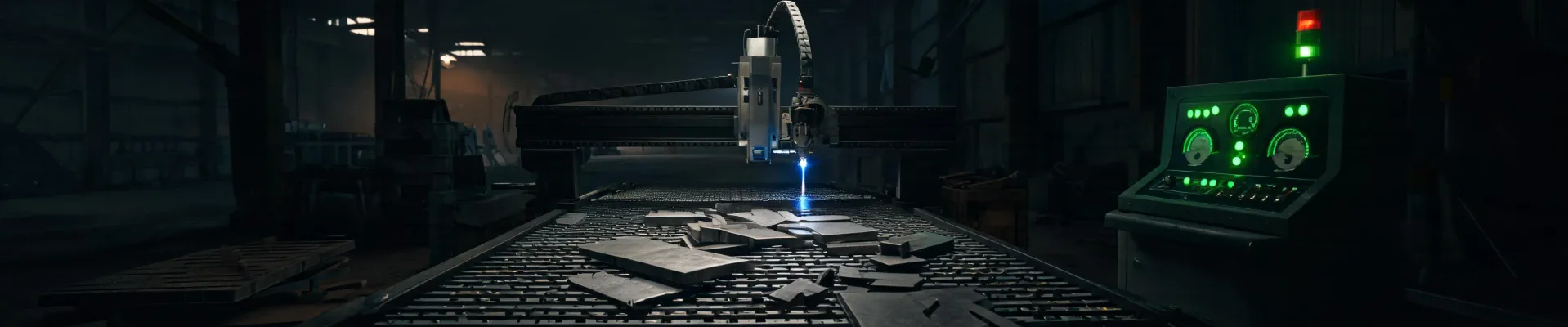
Let's start with the Hypertherm Powermax 30 XP mechanized system. According to Hypertherm's published specs, it's a 30-amp plasma system with a recommended cut thickness of 5/16 in. on mild steel and a maximum cut of 1/2 in. It is not a heavy plate machine. But it's air-cooled, light enough to mount in a small cell, and designed to be automated. The mechanized part means it's ready for a CNC table or a track cutter, not just hand operation.
A MIG welder doesn't cut. It joins. That's the obvious first statement, but I still see shops buy a 250-amp MIG and forget that they still need something to cut, bevel, or fit the parts. MIG welder sizes matter in a simple way: more amps means more material capacity, but you also need the duty cycle to support production work. A 140-amp 120V machine is fine for sheet metal repairs. A 210-amp 230V machine handles 3/8 in. plate with multiple passes. The sticker number is not the whole story.
Here's the first conclusion, and it's not what I expected when I started this job: a mechanized plasma system often improves weld quality as much as buying a better welder. Why? Because the weld is only as good as the joint. A clean, square-cut edge with consistent bevel saves fit-up time. We saw a 34% drop in rework when parts came off the mechanized table instead of the hand plasma cutter.
Dimension 2: Stainless Steel Wire and Process Fit
If you work with stainless, the comparison shifts. When you set up a MIG welder for stainless, the MIG welder stainless steel wire choice is the first thing I check. Use ER308L for 304 stainless and ER316L for 316 stainless. Solid wire is usually the right call for sheet and light plate. Your shielding gas needs to include argon and CO2; many shops use a tri-mix or at least a 98% argon / 2% CO2 blend. Stainless wire is stiffer than carbon steel wire, and in a standard MIG gun it can bird-nest if the liner is wrong or the drive roll pressure is off.
Plasma cutting doesn't add filler metal. It produces a cut edge, and for stainless under about 1/4 in., a mechanized plasma setup can give you a much better starting point than a notching shear or an abrasive saw. The tradeoff is that plasma leaves an oxide layer on the edge, so you still need to brush or grind before welding if the application needs full penetration.
The counterintuitive finding: for shops doing thin stainless fabrication, a small mechanized plasma system is more valuable than a bigger MIG welder. A 30-amp system won't cut thick plate, but it creates accurate parts for the MIG welder that follows it. Better edge quality means less cleanup at the weld station. If you already have a 200-amp MIG welder, the next equipment dollar often goes further on a mechanized plasma table than on a 300-amp machine.
Dimension 3: Welding Machine Ventilation and Shop Air
Welding machine ventilation is the dimension most buyers skip. It's also one of the reasons I reject equipment layouts.
MIG welding stainless steel produces fume with hexavalent chromium. That is a serious respiratory hazard. A ceiling fan doesn't cut it. You need local exhaust at the source—a fume arm positioned within a few inches of the arc—or a fume extraction gun. Plasma cutting produces fine particulate and nitrogen dioxide. A mechanized plasma table usually needs a downdraft table or a water table to control the fume, especially when the torch runs unattended.
In an enclosed shop, the welding machine ventilation requirement can be the deciding factor between a MIG station and a mechanized plasma cell. A MIG welder with a fume arm can live near a roll-up door. A plasma table in a corner with no downdraft will fill the air quickly. We once set up a plasma table with only ambient ventilation. The operator had a headache after the first run, and I stopped production. It wasn't dramatic—no alarms, just an operator who felt rough. That's a red flag.
Dimension 4: Shipping Code, Customs, and the Cost of Certainty
Here's the part that doesn't get enough attention: the Hypertherm plasma cutting systems shipping code. It sounds like an admin detail, but it can be the difference between a clean delivery and a week of customs delays.
When you get a quote, ask for the complete part number and the shipping code in writing. In many cases, that code maps to the HS/HTS classification for customs. I'm not a freight broker, so verify this with yours. But the wrong classification can add brokerage fees and delays that the supplier's quote doesn't include. And if the shipping code on the packing list doesn't match the invoice, don't accept the crate before you check it.
We didn't have a formal verification process for inbound machine orders. Cost us when a $12,500 Hypertherm package arrived without the mech torch cable. The vendor claimed it was within industry standard. Normal tolerance in my book is: if the part number on the packing list matches the PO, it goes on the floor. If not, it gets rejected and redone at their cost. Now every contract includes specification requirements, and I've rejected a batch before unloading.
This is also where I'll make an argument for paying extra for certainty. We paid an additional fee for a guaranteed delivery date on the Powermax 30 XP mechanized system. The alternative was missing a $15,000 client milestone. In that situation, probably on time is the biggest risk. If a supplier can't give you a firm ship date and a clear shipping code, that tells you how they handle uncertainty. It's not about the rush fee; it's about the cost of a missed deadline.
An uncertain cheap delivery is more expensive than a certain rush fee. We learned that the hard way.
And one more note on claims: if a sales page says a plasma system is zero maintenance, ask for proof. Per FTC guidelines (ftc.gov), claims need to be truthful and substantiated. No machine I've audited is zero maintenance. Consumables wear, torch leads crack, filters need changing. That's normal.
Which One Should You Buy?
Looking back, our decision was a risk tradeoff. The upside was faster turnaround on stainless parts. The risk was that we would reduce welding capacity by spending the money on plasma instead of a second MIG station. I kept asking myself: is speed worth potentially slowing down the weld cell? It was—because the weld cell was already the bottleneck, and better parts didn't make it slower. They made it less wasted.
- Buy the MIG welder first if your work is structural steel, repair, or general fabrication. Choose the MIG welder size based on the thickest material you regularly weld—not the one-time repair job. For stainless, order the right MIG welder stainless steel wire and a quality feeder; that combination will serve you for years.
- Buy the Hypertherm Powermax 30 XP mechanized system first if you're making parts from sheet or plate under 1/2 in., especially stainless, and you want to automate cutting before welding. It won't replace a MIG welder, but it will make your existing welder faster.
If the budget allows only one machine, most shops should buy the welder first because you can make repairs with it. But if you're producing parts, not repairing them, the mechanized plasma system is the higher-leverage tool. I said that after reviewing both options for our shop.
Even after choosing the 30 XP mechanized system, I kept second-guessing. What if a bigger MIG welder would have served more jobs? The two weeks until install were stressful. Then we cut the first batch of stainless parts, and the fit-up at the weld station was better than it had ever been. I haven't regretted it.

Elise Marceau
Elise Marceau is an LED display and digital-signage systems analyst covering LED video walls, modular screens, transparent LED, control processors, and indoor or outdoor signage. She applies IEC 62368-1 safety principles while comparing pixel pitch, luminance, contrast, refresh rate, colour uniformity, viewing angle, ingress protection, power density, module serviceability, and signal redundancy. Her specification guides help integrators, venue operators, retailers, and procurement teams align viewing distance, ambient light, content format, installation access, electrical load, and lifecycle support.