-
What a machine torch actually changes
-
Scenario A: Your work is mostly one-off repairs
-
Scenario B: Your work involves repeat parts or table cutting
-
Scenario C: Your real bottleneck is stainless welding or thin sheet
-
The old 'hand torch first' rule is changing
-
How to tell which scenario is really yours
-
Bottom line
I coordinate emergency fabrication work. Not the kind that gets planned on a calendar weeks in advance. The kind where a processing plant calls Monday morning and a replacement part has to ship Friday afternoon, or a line stops. I've handled 200+ rush jobs over eight years, and that experience changed how I buy equipment: buy the thing that removes the biggest risk first.
If you're searching for a Hypertherm 65 machine torch or trying to figure out the Hypertherm Powermax 65 price, you're not really asking which torch is better. You're asking whether spending that money now will solve your problem before the next deadline. I can help with that, but the answer depends on which of three situations you're in.
What a machine torch actually changes
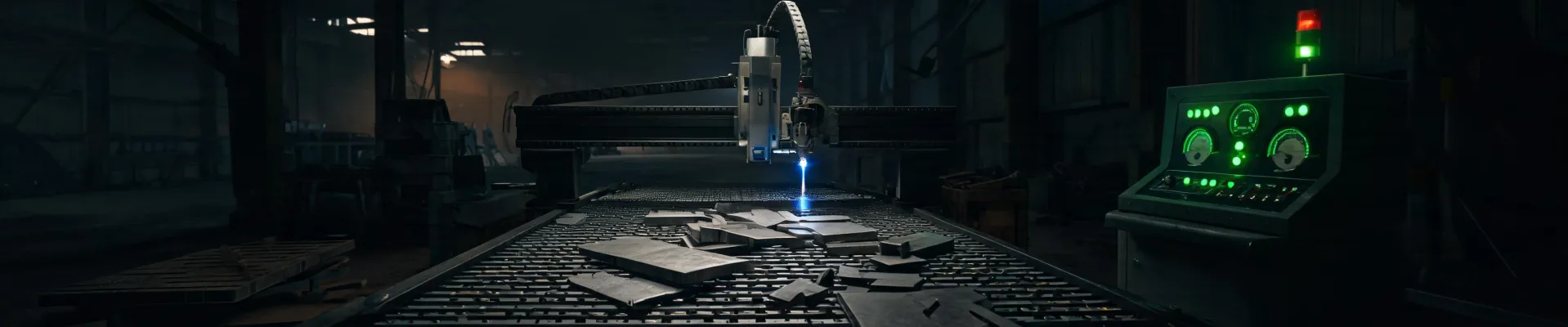
A machine torch is not a higher-powered hand torch. According to Hypertherm's product documentation (hypertherm.com), the Powermax 65 machine torch is designed for mechanized cutting. It is meant to be mounted to a carriage, track, or CNC table. The benefit is consistency: the torch holds its standoff distance, travel speed, and cut angle better than a hand usually can.
It's tempting to think that means a machine torch is always the more professional choice. That's an oversimplification. A machine torch only pays off when your work needs that consistency. If it doesn't, you're paying extra for capability that slows you down.
Scenario A: Your work is mostly one-off repairs
Skip the Hypertherm 65 machine torch if your typical week is random repair work. Broken brackets, worn shafts, pipe supports, odd angles on a job site. In that world, a hand torch with a straightedge is not a compromise. It's the right tool.
When I'm triaging a rush job, my first question is simple: does the customer need one exact part or twenty identical parts? If it's one part, a setup requiring a torch carriage, rail, and test cut can eat twenty minutes before you make a single spark. A skilled hand can already have the replacement cut, fit, and tacked by then.
Here's something vendors won't tell you: a machine torch doesn't fix bad material prep, warped plate, or poor cut direction. It still needs a stable base. If you're cutting rusty, uneven steel in the field, the machine torch can't save you. It can actually make the job harder because it's less maneuverable.
So buy the hand torch, buy good consumables, and practice holding a consistent standoff. That will do more for your cut quality than a machine torch sitting on a shelf.
Scenario B: Your work involves repeat parts or table cutting
Buy the machine torch if your shop cuts multiples. Gussets, flanges, base plates, brackets, or any part where each piece needs to look like the last one. Even if you don't have a full CNC table, a simple rail or track setup with a Powermax 65 machine torch transforms jobs like that.
In March 2024, we had 36 hours to produce 22 identical mounting plates for an emergency conveyor repair. The deadline wasn't about a penalty clause; the customer's whole production line was down. We mounted the machine torch on a small section table, dialed in the height, and ran the first test plate. After that, the next 21 plates were repeatable enough that the welder didn't need to grind every edge. That saved hours. With a hand torch, each plate would have varied slightly, and those small variations add up fast when you're welding a tight assembly.
Looking back, I should have specced the machine torch on our first Powermax 65 instead of adding it later. At the time, I thought the hand torch would cover 90% of our work. It did. But the remaining 10% took 40% of our time because every repetitive part became a brand-new manual operation.
As for the Hypertherm Powermax 65 price, expect it to vary by package and dealer. I've quoted enough of these over the past year to know the machine torch version usually lands a few hundred dollars above the hand torch kit. Prices move, so verify current numbers before you budget. But in this scenario, that extra cost is not a luxury. It's the difference between hand-cutting every part and letting the machine hold the tolerance for you.
Scenario C: Your real bottleneck is stainless welding or thin sheet
This is the one that surprises a lot of buyers. If your shop does mostly stainless steel work or thin sheet fabrication, plasma might not be your most urgent purchase. I say that carefully because I love Hypertherm systems. But I've watched people spend $3,500 on plasma cutting when their actual production bottleneck was joining stainless parts together.
If you make food equipment, architectural stainless, or custom sheet metal enclosures, a dedicated stainless welding machine might improve your deadlines more than any plasma torch. The same logic applies if you're considering an AIM MIG welder. The important question isn't the brand sticker. It's whether the machine has a smooth wire feeder, a proper liner for stainless wire, and the ability to run the right shielding gas. Get that part right first.
Thin sheet is another trap. If you open a spot welding machine diagram, it looks straightforward: two electrodes, a piece of sheet metal, and a burst of current. The diagram doesn't show electrode force, tip geometry, or surface cleanliness, which are often more important than the current setting. A dedicated spot welder or resistance welder can outperform a multi-process MIG machine on a row of spot welds. So if your jobs involve thin lap joints, don't assume more plasma power is the answer.
This isn't anti-plasma advice. It's anti-wrong-priority advice. If you're regularly cutting 1/2-inch plate, buy the Powermax. If most of your revenue comes from joining stainless or spot welding thin sheet, buy the welding machine you actually need and plan the plasma purchase later.
The old 'hand torch first' rule is changing
What was best practice in 2020 isn't always best practice in 2025. A few years ago, I would have told a small independent shop to start with a hand torch and add a machine torch once they bought a CNC table. That advice made sense when machine-controlled cutting felt like a big step.
It's a different situation now. Lightweight rail systems and affordable section tables are common. A one-person shop can use a Powermax 65 machine torch for semi-automated cutting without a full CNC setup. The fundamentals haven't changed: consistent standoff and travel speed still determine cut quality. But the execution has transformed, and shops that ignore that can fall behind on repeat jobs.
That said, don't let new capability convince you to buy something your actual mix doesn't call for. The fundamentals still matter, including the fundamental of making money on the jobs you have, not the jobs you wish you had.
How to tell which scenario is really yours
Stop looking at what you hope to do. Look at your last 20 paid jobs and answer these questions:
- How many involved a part you had already made before?
- How many needed tolerances tight enough to matter for weld prep?
- How many were mostly stainless steel or material thinner than 1/8 inch?
- How many would have been faster as a spot weld or a MIG weld bead?
If most of those jobs were one-off repairs on thicker carbon steel, skip the machine torch and keep your money. If most were repeated parts or table cuts, make the machine torch part of your system. And if most were stainless or thin sheet, it's time to prioritize welding equipment before you spend on another plasma cutter.
Bottom line
There is no universal best answer. There is only the best answer for your production mix and your deadlines. The right tool is the one that removes the biggest risk before a customer calls with an emergency.
So before you click buy, ask yourself what happens at 3:00 p.m. when a rush order lands on your desk. If the answer is that you need to cut one odd-shaped repair piece, a hand torch is enough. If the answer is that you need twenty identical parts on a truck by Friday, a machine torch is not just a spec; it's your delivery plan.

Elise Marceau
Elise Marceau is an LED display and digital-signage systems analyst covering LED video walls, modular screens, transparent LED, control processors, and indoor or outdoor signage. She applies IEC 62368-1 safety principles while comparing pixel pitch, luminance, contrast, refresh rate, colour uniformity, viewing angle, ingress protection, power density, module serviceability, and signal redundancy. Her specification guides help integrators, venue operators, retailers, and procurement teams align viewing distance, ambient light, content format, installation access, electrical load, and lifecycle support.