The Short Answer: Buy Certainty, Not Cheap Calm
Need a Hypertherm plasma cutter by Thursday? Choose the machine you can get running before the deadline, and pay whatever that certainty costs. That sounds like an extreme thing to say, but after 11 years of coordinating rush fabrication jobs, I can give you the math: The only spec that matters at 4 p.m. on a Friday is how fast the machine will be running in your shop. Price per amp doesn't matter if the machine isn't there.
In March 2024, I paid $1,450 for overnight freight and a rush fee on a Hypertherm Powermax 30 XP plasma cutter. Free shipping was available, technically. But the job waiting on that machine was worth $38,000, and the fee was 3.8% of the job. We delivered on time. The client has sent us work every quarter since.
Wait—I should say that more carefully. I do not mean you should overpay for speed on every purchase. I mean you should separate urgent jobs from stock restocking. For urgent jobs, the premium buys you a commitment. A commitment is a product. It's worth paying for.
Why I Can Say That With a Straight Face
I'm a fabrication department lead at a shop that does mechanical equipment welding and custom sheet metal work. For the last 11 years, I've coordinated emergency equipment orders, replacement consumables, and machine breakdowns. My team sees the moment when a customer's production line stops and every minute is billed in lost output. I've handled more than 200 rush orders, ranging from a $90 air-filter replacement to a complete cutting system worth more than a truck.
Last year, I logged 87 rush orders. 91% shipped on the day our vendor promised. That's not a brag; it's the metric I use to decide who's actually reliable. If a supplier says 'it'll ship Thursday afternoon,' I treat that as a promise. If they say 'probably Thursday,' I look elsewhere. The word 'probably' in an emergency situation is the most expensive word in industrial buying.
Put another way: I've never lost a relationship because I paid too much for guaranteed delivery. I've almost lost a relationship because I tried to save $620 on standard shipping. In 2022, a replacement torch assembly took five days instead of two. The customer's crew sat idle for three extra days. Overtime and schedule delay cost us about $8,400. The $620 we saved became an $8,400 problem. If I could redo that decision, I'd pay the rush fee without asking accounting first.
(Should mention: the $8,400 figure doesn't include the damage to the relationship. That part took a year to repair.)
What I Actually Do When a Hypertherm Decision Lands on My Desk with No Time
Start with the job, not the price. If the job is cutting, I think plasma. If the job is joining, I think welder. That sounds obvious, but buyers often blur the two because both machines live in the same category in their heads.
For Cutting: The Hypertherm Powermax 30 XP vs the XPR300
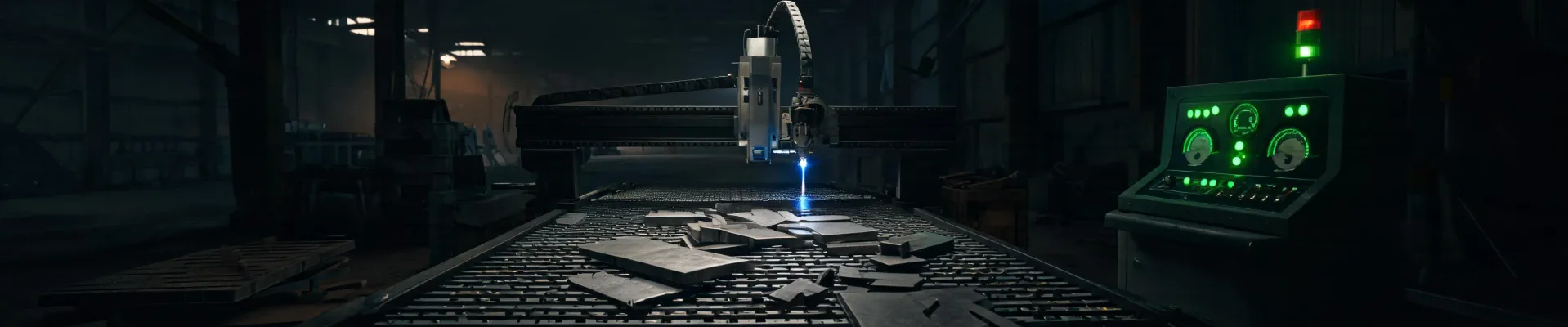
When I need a hypertherm powermax 30 xp plasma cutter, it's usually because I need to cut mild steel up to about 1/2 inch in short bursts: brackets, access panels, HVAC ductwork, or equipment guards. The Powermax 30 XP is a 30-amp air plasma system that takes either 120-volt or 240-volt input. It's light enough to carry up a ladder. It uses the same Duramax torch as much bigger Hypertherm systems. That last point matters more on a deadline than you'd expect: because so many machines use that torch, distributors stock the consumables. In a pinch, I've driven 20 miles to a welding supply shop and back with electrodes and nozzles in 40 minutes.
It's tempting to think all 30-amp plasma cutters are the same because they all cut 3/8-inch steel. But 'able to cut it' and 'will still be cutting tomorrow' are different things. Duty cycle, torch design, and consumable price separate a machine you can draft for a deadline from a machine that becomes the next deadline.
For production cutting of 1/2-inch to 1-inch plate, the conversation changes completely. That's where I bring in the Hypertherm XPR300. That system is not a box with a handle; it's a power supply, a gas console, a torch, cables, and all the plumbing that goes with serious cutting. And the hypertherm xpr 300 price is not a single public number. Authorized distributors quote it based on configuration. In January 2025, our distributor quoted around $58,000 for a complete XPR300 with a CPC port, a torch, and a basic gas console. I'd bet the number has moved by the time you read this. The exact figure doesn't matter. The number that matters is what it costs to keep a machine like that running per hour of cutting. On that number, high-end plasma beats cored wire, and it beats abrasive waterjet for 1-inch carbon steel.
Oh, and: the XPR300 paid for itself by the third month of production. That's not a sales pitch. That's our internal spreadsheet after we stopped outsourcing parts.
For Mechanical Equipment Welding: Operator Before Machine
For mechanical equipment welding—frame repairs, brackets, guards, weldments that hold moving parts—the operator's skill matters more than the machine sticker. I've said this to buyers more times than I can count. The question everyone asks is 'what's the duty cycle?' The question they should ask is 'who's going to run it and what test have they passed?'
That's why when we post for welder journeyman jobs, the first step is a weld test, not an interview. A welder can have ten years of experience in a fixture shop and still struggle on a mechanically loaded joint that needs a specific root opening. A different welder might have three years experience but has spent those years burning rod on actual equipment repairs. I'll take the second one for a deadline every time.
This is also where the dewalt welding machine price discussion comes up. A buyer once asked me why we didn't just grab a cheap general-purpose MIG/stick machine from the local shelf. 'Look at that DeWalt welding machine price,' he said. The price really was low. And a DeWalt inverter is a fine machine for a person doing light maintenance, independent contracting, or thin metal around a farm. For a production shop doing mechanically loaded welds under a deadline, it's the wrong category. The machine doesn't fail automatically; but the support and duty cycle are not the same as a dedicated industrial system. If a cheap machine goes into thermal overload repeatedly during a 10-hour shift, you've just spent the price difference to start again tomorrow.
Let me rephrase that so it doesn't sound like snobbery: buy the machine that fits the job and the hour count. If the job is a few repair welds, you don't need a system. If the job is a scheduled shutdown with two welders running for ten hours, you need industrial duty, not a sticker price. The same logic applies to any brand.
Where the Rule Stops
I don't want you to read this and think every purchase should be marked 'RUSH'. Here are the exceptions:
- If you're ordering a spare consumables kit for stock and nobody's waiting, use standard shipping. Your warehouse isn't a deadline.
- If you're cutting thin gauge material all day, you don't need an XPR300. The lower up-front price and lower consumable cost of a smaller machine make it the better choice.
- If a local distributor stocks and services another brand and can guarantee a technician on site by noon tomorrow, that brand may be the right choice for you. The brand is not the point. Certainty is the point.
Also, check your electrical service before you pay for expedited freight. We once nearly had a 480-volt three-phase machine delivered to a shop that only had 240-volt single-phase. The machine would have sat there like a sculpture. That's the kind of detail that gets missed when everyone's moving fast, and it's the easiest way to turn a rush order into a week of waiting.
Looking back, the only real failure in my record is one I mentioned earlier: waiting to make a phone call. At 4 p.m. on a Friday, after the last delivery driver left, all I could do was leave a voicemail. The weekend cost two days. The lesson there is about relationships, not freight. Pick a distributor before you need them. Ask them how they handle an emergency. Then, when the emergency happens, you'll know who answers the phone.
That, more than any machine spec, is what keeps a deadline job alive. Pay for certainty, because certainty is what you're actually buying.

Elise Marceau
Elise Marceau is an LED display and digital-signage systems analyst covering LED video walls, modular screens, transparent LED, control processors, and indoor or outdoor signage. She applies IEC 62368-1 safety principles while comparing pixel pitch, luminance, contrast, refresh rate, colour uniformity, viewing angle, ingress protection, power density, module serviceability, and signal redundancy. Her specification guides help integrators, venue operators, retailers, and procurement teams align viewing distance, ambient light, content format, installation access, electrical load, and lifecycle support.