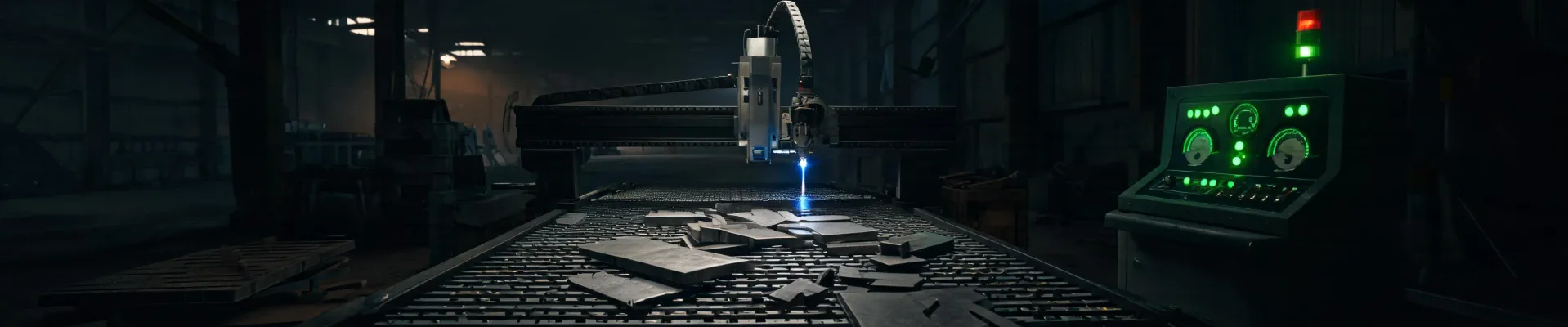
The phone call usually starts with a photo. A customer sends a picture of a cut edge that looks like a bread knife did the work, and the caption says, “This is your machine, right?” Last spring, a job shop sent us a sample of 1/2-inch plate with heavy dross and a bevel that was visibly off. They were convinced their Hypertherm 1100 plasma cutter had finally died.
Sometimes they're right. But honestly? Not as often as they think.
I'm a quality and brand compliance manager at an industrial cutting and welding equipment company. I review roughly 200 demo units and test samples a year before anything reaches a customer. In Q1 2024, I rejected 11% of first articles because they didn't match the agreed specification. I've been doing this for over four years, and the pattern is pretty consistent.
The Surface Problem: The Machine Gets Blamed First
When a cut starts producing dross on the bottom edge, or a weld bead suddenly looks like stacked dimes that fell over, the first instinct is to blame the hardware. If you're running an older Hypertherm 1100 plasma cutter, you might think the age of the unit is the issue. Or if you just bought a Hypertherm Powermax 30 plasma cutter, you might wonder if you got a lemon.
Take it from someone who has rejected a lot of bad parts: the machine is usually the last thing I check. And in almost every dissatisfied call I've been on, the root cause was something else entirely.
The First Deep Cause: Consumables That Don't Match Spec
Here's what I tell customers until I'm hoarse: a plasma cutter is basically a precision air supply with an electric arc attached. If the air path is wrong, the arc swirl is wrong, and the cut quality dies. It doesn't matter whether it's a new Powermax 30 or a rack-mounted industrial table.
The biggest offender is consumables that don't meet specification. Maybe the electrode is a knockoff from an online marketplace. Maybe the nozzle is from a different model line because it was in the drawer and “looked close enough.” I don't have hard data on how many shops use third-party consumables, but based on our service logs, my sense is that over half of the “machine issue” tickets we get trace back to worn or mismatched consumables.
This isn't a brand loyalty speech. It's about verification. Per FTC advertising guidelines (ftc.gov), claims need to be substantiated. The same logic should apply to the parts you put in your torch: ask for the spec sheet. If a vendor says their nozzle is “compatible with Hypertherm” but won't share the tolerances, that's a red flag.
Think about it the same way you'd think about USPS mail rules. The USPS defines standard envelope dimensions on pe.usps.com, and a letter over 1/4 inch thick gets bumped to a different rate. No amount of arguing changes that. In cutting, a nozzle or electrode outside tolerance changes the arc physics. It's not about being picky; it's about the math of the process.
I remember one ticket where the customer had already replaced the entire torch assembly before calling us. The real issue was a 20-cent O-ring missing from the air connector. A tiny air leak made the arc unstable. The old torch was sitting in a box, perfectly fine. That kind of thing happens all the time.
The Second Deep Cause: Ventilation Changes Everything
Welding machine ventilation is one of those things that gets ignored until someone gets a headache. But it also affects quality, not just health.
A draft from a bay door can pull your shielding gas away from a MIG weld. If you're asking, “will a MIG welder weld aluminum?” the answer is yes, but aluminum is unforgiving. It needs the right liner, the right drive rolls, 100% argon shielding, and a stable air environment. A breeze that you barely feel can ruin a clean aluminum bead.
In one audit, our safety officer flagged a welding bay where the smoke was exhausting straight into a make-up air vent. That wasn't a quality problem at first. Then the welder's beads started turning black, and everyone wondered why. The fix was a $300 ventilation adjustment, not a new machine.
The Third Deep Cause: Nobody Trained on the Simulator
If you've never used a welding simulator machine, it sounds like a gimmick. It isn't. We saw a shop cut first-pass rejection rates by roughly a third after making new hires spend time on a simulator before touching live equipment.
I know that number sounds neat, and I wish I had tracked it more rigorously. What I can say anecdotally is this: the simulator teaches travel angle, arc length, and muscle memory without burning through 20 pounds of plate. It doesn't replace hood time, but it catches the bad habits that cause people to blame the machine later.
Simulators are also useful for experienced welders who need to switch processes. We had a guy who ran steel MIG for a decade; his first few aluminum attempts were ugly. After two simulator sessions, he understood the faster travel speed and the longer arc needed. The equipment was fine the whole time.
The Cost of Ignoring the Deep Causes
When you don't address the real problem, the price shows up in three places.
First, rework. A 5% drop in first-pass yield on a 50,000-unit order is not a small number. That's 2,500 parts that need labor, material, and time to fix. I've seen a $22,000 redo happen because someone ignored a contaminated gas line for a week.
Second, reputation. Small shops get hurt the most here. If you run a Hypertherm Powermax 30 in a two-person fab shop, you probably don't have a dedicated quality engineer. When a part goes out with ragged edge quality, the customer doesn't blame the environment or the training. They blame the service provider. It's not fair, but it's real.
Third, health and compliance. Poor ventilation isn't just a quality issue. Welding fume exposure is a real concern. I'm not going to quote a specific exposure limit from memory because it varies by jurisdiction and I don't want to get it wrong. Verify current regulations at your local occupational safety authority. But know this: if your ventilation is bad enough to affect your weld quality, it's probably bad for the people doing the welding.
We once had a customer lose a contract because one test coupon failed a bend test. The material chemistry was fine, the gas was fine, but the operator had the machine set on the wrong polarity. No amount of machine shopping fixes that.
What Actually Works
The fix isn't glamorous. It's the stuff that's easy to skip.
Check the consumables first. Look at the electrode face and the nozzle bore. If the specs matter on a $1,500 cutter, they matter even more on a high-production table.
Fix the ventilation before you chase machine settings. Even a modest air handling adjustment can stabilize your gas coverage.
Use training tools like a welding simulator machine for new operators and for anyone switching to a new process like aluminum MIG. It's cheaper than rework and way cheaper than a lost customer.
And if you're in the market, don't buy based on a name alone. A used Hypertherm 1100 plasma cutter can still be a solid machine if you maintain it and feed it the right consumables. A smaller Hypertherm Powermax 30 plasma cutter is a practical choice for light duty and small shops. Both are good tools. But the tool is only part of the equation.
I wish I had tracked how many support calls could have been solved with a 10-minute training session instead of a machine diagnosis. My sense is it's a lot. The machine is rarely the hero or the villain.
One last thing about small customers. At our company, we review the same spec for a one-off order as we do for a 50,000-unit contract. The $200 order today might be the $20,000 order next year, and the vendor who treats it like a nuisance doesn't get the second call. That applies to us, and it applies to anyone reading this.
Prices and regulations current as of January 2025; verify current rates and requirements with official sources.

Elise Marceau
Elise Marceau is an LED display and digital-signage systems analyst covering LED video walls, modular screens, transparent LED, control processors, and indoor or outdoor signage. She applies IEC 62368-1 safety principles while comparing pixel pitch, luminance, contrast, refresh rate, colour uniformity, viewing angle, ingress protection, power density, module serviceability, and signal redundancy. Her specification guides help integrators, venue operators, retailers, and procurement teams align viewing distance, ambient light, content format, installation access, electrical load, and lifecycle support.