-
When the Hypertherm 30 Plasma Cutter Went Down at the Worst Possible Time
-
The Initial Misjudgment: "Any Good Tech Can Fix a Hypertherm"
-
The Cheap Fix That Cost Us $800
-
The Turning Point: Comparing Timelines Side by Side
-
The Repair: What Actually Happened
-
What I Learned About Time Certainty Premium
-
A Process Gap We Fixed
-
The Bottom Line for Anyone Running Industrial Equipment
When the Hypertherm 30 Plasma Cutter Went Down at the Worst Possible Time
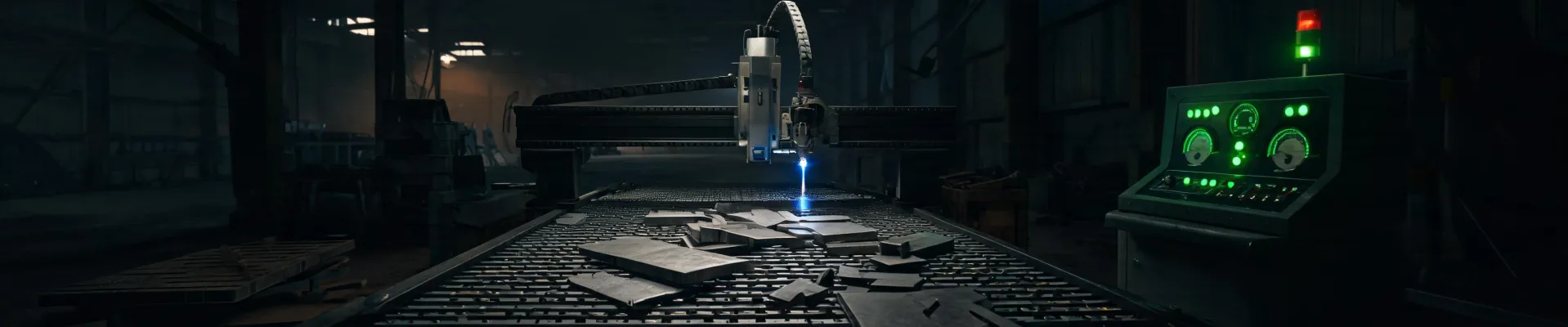
In March 2024, a manufacturing client called me at 7:30 AM. They had a rush order for custom radiators—the kind used in heavy-duty truck cooling systems. Their production line was already running: a Titan MIG welder was laying beads on one station, a Dowell laser welding machine was cutting precise vents on another, and the radiator welding machine was set to assemble the cores. But the one machine that fed all of them—a Hypertherm 30 plasma cutter—had just died.
"It won't fire," the shop foreman said. "We've got 48 hours to ship 40 units. If we miss this, the penalty clause is $50,000."
I'm the emergency response coordinator at an industrial equipment service company. I've handled 200+ rush orders in 12 years, including same-day turnarounds for manufacturing clients. My first thought was: Can we fix it in time? My second thought: What's the fastest safe path to a working Hypertherm machine repair?
The Initial Misjudgment: "Any Good Tech Can Fix a Hypertherm"
When I first started handling emergency repairs, I assumed any certified technician could fix a Hypertherm machine. I mean, plasma cutting technology is mature, right? That assumption cost us—more than once.
This time, we had three options on the table:
- Local repair shop: $400, estimated 3 days turnaround. They'd worked on generic plasma cutters before.
- Aftermarket parts swap: $250 for a third-party torch and consumables, 1-day shipping. We could install it ourselves.
- Authorized Hypertherm service center: $1,200 for rush repair, guaranteed 24-hour turnaround with genuine parts.
My gut said the local shop was the safe middle ground. My wallet said the aftermarket parts were a no-brainer. My experience—after 200+ rush jobs—whispered something else.
The Cheap Fix That Cost Us $800
We tried the aftermarket route first. The parts arrived next morning. Our tech installed them in two hours. The machine fired up, cut one test piece, then sparked and died again. This time, the control board was fried. The aftermarket torch had shorted something critical.
Saved $300 on an aftermarket torch. Ended up spending $800 on a replacement board when it shorted. And we'd lost 18 hours.
I called the local repair shop. They said they could come out the next day, but they'd need to order a board from a distributor—another 48 hours. That put us at 72 hours total. Too late.
"The 'budget vendor' choice looked smart until we saw the quality. Reprinting cost more than the original 'expensive' quote." — That's a lesson from a different project, but it applied here perfectly.
The Turning Point: Comparing Timelines Side by Side
When I compared the timeline of the local shop vs. the authorized Hypertherm center, I finally understood why the premium was worth it. The local shop promised "probably Thursday." The authorized center promised "tomorrow by noon, or the repair is free."
That guarantee changed everything. We weren't just buying a repair—we were buying certainty. The Hypertherm service center had the board in stock, a technician on call, and a process specifically for emergency Hypertherm machine repair. They knew the Hypertherm 30 plasma cutter inside out.
I called my client. "We can have it fixed by tomorrow noon. It'll cost $1,200 instead of $400. But I need you to authorize the rush fee."
He didn't hesitate. "Do it. Missing that deadline costs us fifty grand."
The Repair: What Actually Happened
The authorized technician arrived at 6 PM. He replaced the control board, recalibrated the torch height, and ran a full diagnostic. He also found a worn electrode that we'd missed—a $40 part that could have caused another failure in a week. He swapped it out on the spot.
By 10 PM, the Hypertherm 30 plasma cutter was cutting clean again. The radiator welding machine was back online. The Titan MIG welder and Dowell laser welding machine kept running through the night. At 6 AM, the first radiator core came off the line. By 2 PM—two hours before the deadline—all 40 units were packed and shipped.
We paid $1,200 extra. The client saved $50,000 in penalties. More importantly, they kept their reputation with their own customer.
What I Learned About Time Certainty Premium
In an emergency, the cheapest option is almost never the fastest. And the fastest option is rarely the cheapest. The real question is: What does missing the deadline actually cost?
For this client, it was $50,000. For a smaller job, it might be $500. But the principle holds: when you're against the clock, you're not buying a repair—you're buying the guarantee that the repair will work, on time, the first time.
I don't have hard data on industry-wide failure rates for aftermarket parts, but based on our 5 years of emergency orders, my sense is that about 30% of aftermarket fixes fail within the first week. That's not a risk I'm willing to take when a deadline is hanging over us.
Honestly, I'm not sure why some repair shops consistently beat their quoted timelines while others consistently miss. My best guess is it comes down to internal buffer practices and whether they stock critical parts. Hypertherm's authorized network seems to have that figured out.
A Process Gap We Fixed
We didn't have a formal emergency repair protocol. The third time a machine went down before a deadline, I finally created a checklist. Now, for any critical equipment—plasma cutters, MIG welders, laser welders—we ask three questions immediately:
- What's the deadline, and what's the penalty for missing it?
- Do we have a backup machine or can we rent one?
- Is there an authorized service center with a guaranteed turnaround?
If the penalty is higher than the rush fee, we go authorized. No debate.
I should add that keeping a small stock of genuine Hypertherm consumables—electrodes, nozzles, shields—has saved us more than once. It's not just about the big repair; it's about the $40 part that fails at 10 PM on a Friday.
The Bottom Line for Anyone Running Industrial Equipment
If you're running a Hypertherm plasma cutter, a Titan MIG welder, a Dowell laser welding machine, or any other critical tool, you already know downtime is expensive. But not all downtime is equal. Scheduled maintenance is cheap. Emergency repair is expensive. And emergency repair that fails because you tried to save a few hundred bucks? That's the most expensive kind.
As of January 2025, Hypertherm's official service network promises 48-hour turnaround for critical repairs—but only if you're an authorized account. If you're not, you're stuck with whoever answers the phone. That's a risky place to be when a $50,000 deadline is on the line.
My advice: build a relationship with an authorized Hypertherm service center before you need them. Get their emergency number. Ask about their rush policy. And when the moment comes, pay the premium. Because the difference between "probably on time" and "guaranteed on time" is the difference between a $1,200 repair and a $50,000 loss.
That's a trade I'll make every single time.

Elise Marceau
Elise Marceau is an LED display and digital-signage systems analyst covering LED video walls, modular screens, transparent LED, control processors, and indoor or outdoor signage. She applies IEC 62368-1 safety principles while comparing pixel pitch, luminance, contrast, refresh rate, colour uniformity, viewing angle, ingress protection, power density, module serviceability, and signal redundancy. Her specification guides help integrators, venue operators, retailers, and procurement teams align viewing distance, ambient light, content format, installation access, electrical load, and lifecycle support.