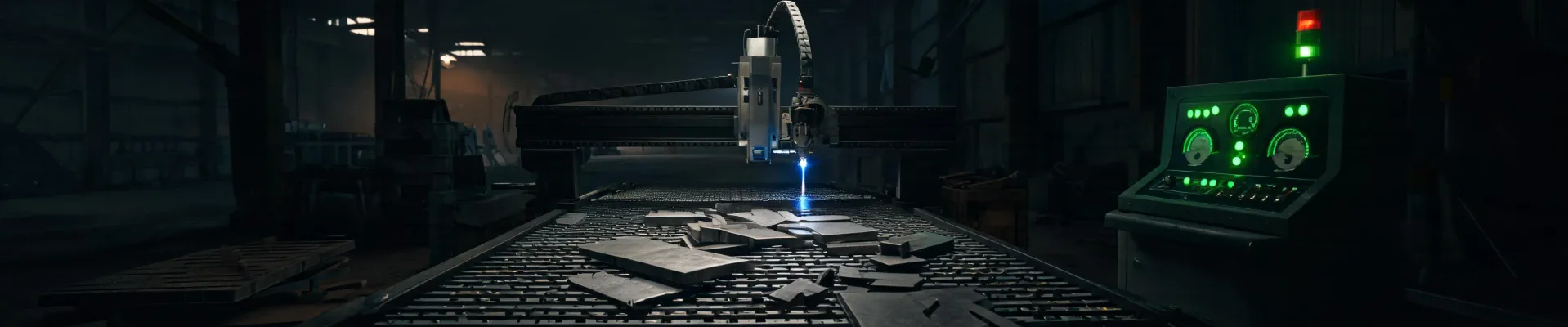
It started with a noise. A high, straining whine from my Hypertherm Powermax 600, right in the middle of a 200-piece bracket order. I remember thinking, "It's probably just the consumables. Swap the electrode and move on."
I was wrong. Not about the noise—the machine definitely needed attention. I was wrong about how deep the problem went.
Background: How I Ended Up with the Powermax 600
I run a small fabrication shop. We do custom steel work, repair jobs, and the occasional production run. I bought the Powermax 600 used from a local shop that was upgrading. It was a solid machine—older, but reliable. At first.
When I first started maintaining plasma equipment, I assumed that if a machine cuts, it's fine. That's the initial mistake I made with just about every piece of gear. "It still works" became my maintenance schedule. I didn't clean filters. I didn't drain the compressor tank. I used whatever consumables were cheapest online. I wasn't lazy exactly. I was busy. And I was wrong.
The Breakdown: What Actually Happened
The bracket order was due Friday. On Tuesday, the Powermax started cutting rough. The arc was wandering, the cuts had dross, and occasionally the pilot would sputter. My first instinct was consumables.
I replaced the electrode. No change. Nozzle. Still bad. Swirl ring. Better, but not right. That's when I actually opened the manual. Should have done that earlier.
Hypertherm's published maintenance schedule—which I definitely read after I should have—recommends inspecting the air filter every 50 hours and draining moisture from the compressor line daily. I had done neither. Not once.
I checked the filter. It was clogged with dust and oil. The water separator was full. There was water in the air line. I know that now. At the time, I just stood there staring at the mess, doing the math in my head.
Here's the thing: a plasma cutter pulls compressed air through the torch. Any moisture in that air gets ionized in the arc. It causes exactly the symptoms I saw—wandering arc, rough cuts, short consumable life. I could have avoided the whole thing with a 5-minute check.
It took about three hours—or rather, three and a half when you count the trip to the hardware store—to clean the filter and add a proper moisture separator. I thought the problem was solved. It wasn't.
The Expensive Lesson
The next day, the machine fired up, but the cut quality was still off. The arc was narrower than normal and the torch was getting hotter than it should. I swapped in a new torch consumable set. Same issue. That's when I started worrying about the torch lead. And the high-frequency board. I was already imagining a full Hypertherm machine repair bill.
I called a local tech who works on plasma equipment. He asked two questions: "Did you have a moisture problem?" and "How long did it run with water before you shut it down?" My answer to both made him wince.
He found corrosion on the main PCB. It was caused by moisture being pulled through the torch and into the machine. Not a massive failure, but enough to affect the control circuit. The repair cost $680. (Actually, $712 with the new consumables he installed while he was in there.) If I remember correctly, he also charged a shop fee. I don't want to think about the total.
I only believed the maintenance schedule after ignoring it and paying that bill. That's how reverse validation works. I had to lose money to learn what the manual already told me.
5 minutes of verification beats 5 days of correction. Actually, in my case, it was $680 and a weekend of panic.
The Checklist That Saved Us
After the repair, I created a simple weekly checklist. It took me 15 minutes to write and costs about 10 minutes per week to run. Since then, we've caught 47 potential problems before they became failures. I'm keeping count. It hasn't cost us a single unplanned repair on the plasma cutter.
- Drain moisture from air compressor tank
- Check air filter and water separator on plasma unit
- Verify torch consumables are clean and properly seated
- Run a test cut on 1/4-inch steel and check for dross
- Log hours and compare with Hypertherm's service intervals
Some professionals will say this is obvious. It is. That's why it hurt. It was only obvious after I ignored it.
What This Taught Me About Buying Welding Equipment
The Powermax lesson changed how I shop for welding and cutting equipment. When I started looking for a quality mig welder for a new job, I almost went straight for the cheapest 220V unit I could find online. There is a lot of China welding equipment on the market at tempting prices. Some of it is genuinely fine. I'm not here to say otherwise.
But after the whole episode, I asked different questions. What's the support situation? Can I get parts in a week? Is the manual actually written for a human? Who will help me if the main board fails? Those questions are way more important than the sticker price.
A quality mig welder isn't just about arc characteristics. It's about the whole package: documentation, service availability, and consumable reliability. The same logic that made me check the air line on the Powermax applies to a new welder. If something isn't right, you need to know where to look and who to call.
For a beginner looking for a good welding machine for beginners, I now give this advice: choose something with clear support and honest specs. A machine that comes with a real manual and a local dealer is worth more than one that's slightly cheaper but impossible to troubleshoot. You will have problems. Everyone does. The difference is how quickly you can solve them.
The Powermax 600 is still in our shop. It runs fine now. I also added a dedicated water separator on the air line and a pressure gauge. The repair taught me that most problems don't start suddenly—they build up quietly. The noise I heard that Tuesday was the last symptom, not the first.
So if you're reading this because your Hypertherm is acting up, check the simple things first. Drain the air line. Clean the filter. Look at the consumables. And if you're reading this because you're about to buy a welder, let the checklist be your guide. The best machine is the one you can actually maintain.
That's the lesson. Not the $680 one. The one about checking before it breaks. Simple.

Elise Marceau
Elise Marceau is an LED display and digital-signage systems analyst covering LED video walls, modular screens, transparent LED, control processors, and indoor or outdoor signage. She applies IEC 62368-1 safety principles while comparing pixel pitch, luminance, contrast, refresh rate, colour uniformity, viewing angle, ingress protection, power density, module serviceability, and signal redundancy. Her specification guides help integrators, venue operators, retailers, and procurement teams align viewing distance, ambient light, content format, installation access, electrical load, and lifecycle support.