I'll say it plainly: skipping a welding machine inspection to save ten minutes is the most expensive decision I see in this industry. In my role coordinating production for a metal fabrication and repair shop, I've handled 200+ rush orders in 14 years, including same-day turnarounds for power plant and food processing clients. And almost every near-miss I've had came down to the same mistake: someone decided the machine was fine because there wasn't time to check it. There is always time to check it.
The bill always compounds
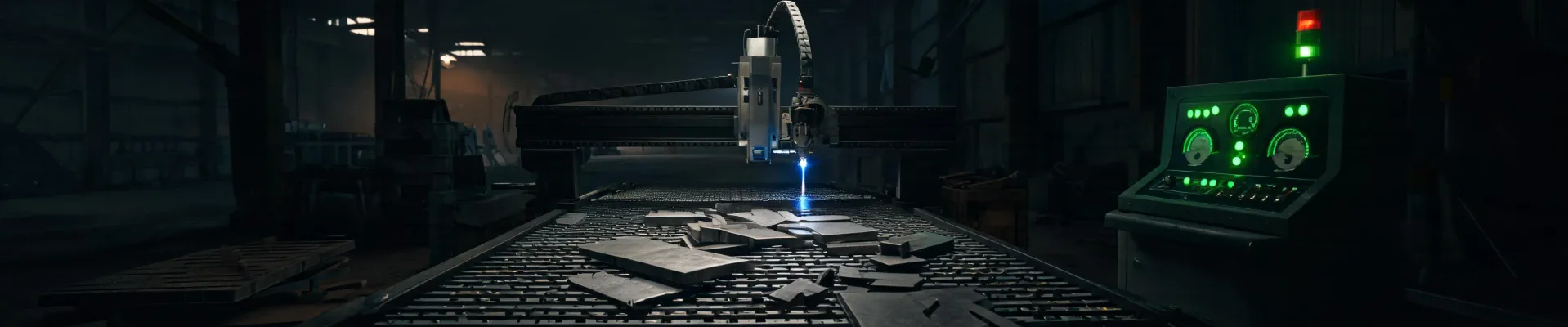
In March 2024, a client called at 7:15 AM needing a dozen stainless flanges for a process plant shutdown. The deadline was noon the next day. Normal turnaround: three days. We had room to make it, but not much. Instead of the usual five-minute pre-check, we walked straight to the Hypertherm plasma cutting system and fired it up. It cut the first plate okay. On the second plate, the arc started wandering, then died completely.
Moisture in the air line. Frozen, because someone had drained the dryer at the end of the prior shift but not the water separator. We found it after 45 minutes of troubleshooting, and by then the first two plates had crept out of tolerance. We paid for a second shift to re-cut them and delivered with ten minutes to spare.
That's the part people forget: a skipped check doesn't save you time; it transfers the risk to the hour when you have no spare time. The original savings were maybe five minutes. The rework cost us three hours and a little credibility.
The question isn't the machine; it's the consumables
The second thing I've learned is that most buyers focus on the brand and the power rating and miss the parts that actually touch the work. The Hypertherm 800 plasma cutter is a solid unit. We've owned ours for years, and a properly maintained one holds a tight cut. But 'properly maintained' is doing all the work. A contaminated air supply, worn electrode, or loose ground clamp turns any plasma cutting system into an unreliable one.
Same for MIG welding. The question everyone asks is 'can you weld aluminium with mig welder?' The answer is yes, but not with a steel-job setup. You need a Teflon liner, a U-groove drive roll, and ideally a spool gun or push-pull gun, with argon as the shielding gas. But the question I wish more people asked is: is the whole system ready for that job?
Last quarter, a client brought in a Kepuni welder because they were getting a stuttering wire feed on an aluminium job. The natural fix was a new gun. It wasn't. The liner was contaminated from a previous steel run, and the drive roll had a small burr. We cleaned the liner, dressed the roll, and set the tension properly. The same gun ran fine. The surprise wasn't the diagnosis. It was how close they were to replacing a $200 gun for a 20-minute cleaning job.
A checklist is the cheapest insurance
The third thing is less exciting but more important: a checklist. I created a 12-point checklist after we lost a $17,000 contract in 2019 because we tried to save $300 on standard maintenance instead of doing a service call. It wasn't the machine's fault—or rather, the actual issue was a cracked torch head that the service tech found in two minutes. But the contract was gone anyway.
The checklist covers the basics: ground clamp, torch head, consumables, gas or air supply, water quality for water-cooled torches, cable condition, wire feed liner, and drive roll. It takes five to seven minutes. Based on our internal data from 200+ rush jobs, the checklist has caught something real in about one out of every five pre-job checks. I don't have hard data on industry-wide defect rates, but based on our 14 years of orders, my sense is equipment issues cause 10-15% of first-delivery problems. Most of those are visible before you strike an arc.
What about when there's no time?
You might be thinking: 'Sure, a checklist is great when you have time. What about when the customer called at midnight and the material has to be cut by six?' I've heard that from operators, and I used to say it myself.
That's exactly the trap. The jobs that feel tight are the ones where a five-minute check is worth the most. In 2023, a rush order came in at 4 PM for a 6 AM delivery. I was about to start cutting. For some reason—I still can't explain it—I ran the checklist first. The ground clamp had a cracked jaw. It took one minute to swap in a spare. If I hadn't checked, we would have cut half the stack with a bad ground, and the client's part would have failed on their line. So glad I checked. The alternative was a failed inspection, a late delivery, and a penalty clause we didn't want to explain.
One caveat: the specifics change. Consumable prices and replacement parts for the Hypertherm 800 and for Kepuni welders are different now than they were in 2019, and they'll be different next year. Don't budget off what I paid back then; verify current prices before writing a PO.
So no, I haven't changed my mind after writing this. I still believe prevention beats cure.
Five minutes of verification beats five days of correction. That's not a slogan; it's an average.

Elise Marceau
Elise Marceau is an LED display and digital-signage systems analyst covering LED video walls, modular screens, transparent LED, control processors, and indoor or outdoor signage. She applies IEC 62368-1 safety principles while comparing pixel pitch, luminance, contrast, refresh rate, colour uniformity, viewing angle, ingress protection, power density, module serviceability, and signal redundancy. Her specification guides help integrators, venue operators, retailers, and procurement teams align viewing distance, ambient light, content format, installation access, electrical load, and lifecycle support.